Column and Photographs By Conservation Warden Heather Hunt
This article appeared in the Wisconsin Waterfowl Association’s February 2026 eNewsletter.

Column and Photographs By Conservation Warden Heather Hunt
This article appeared in the Wisconsin Waterfowl Association’s February 2026 eNewsletter.
When it comes to successful waterfowl hunts in the new year, you need to be where the ducks are.
How do you do that? Scout!
When I moved to my field station in eastern Oneida County, I had a large new area to learn and to scout for ducks. Instead of just a couple of lakes and agricultural fields as I had back home, I found myself surrounded by the Northwoods and more than 1,000 lakes and rivers. This meant a whole lot more places for the ducks to hide.
When it comes to scouting for ducks — whether you are a new waterfowl hunter looking for some tips or living in a new area in search of tips to find prime duck locations — the same scouting basics apply.
Basic Duck Scouting Tips
Once You Find Ducks – Do This
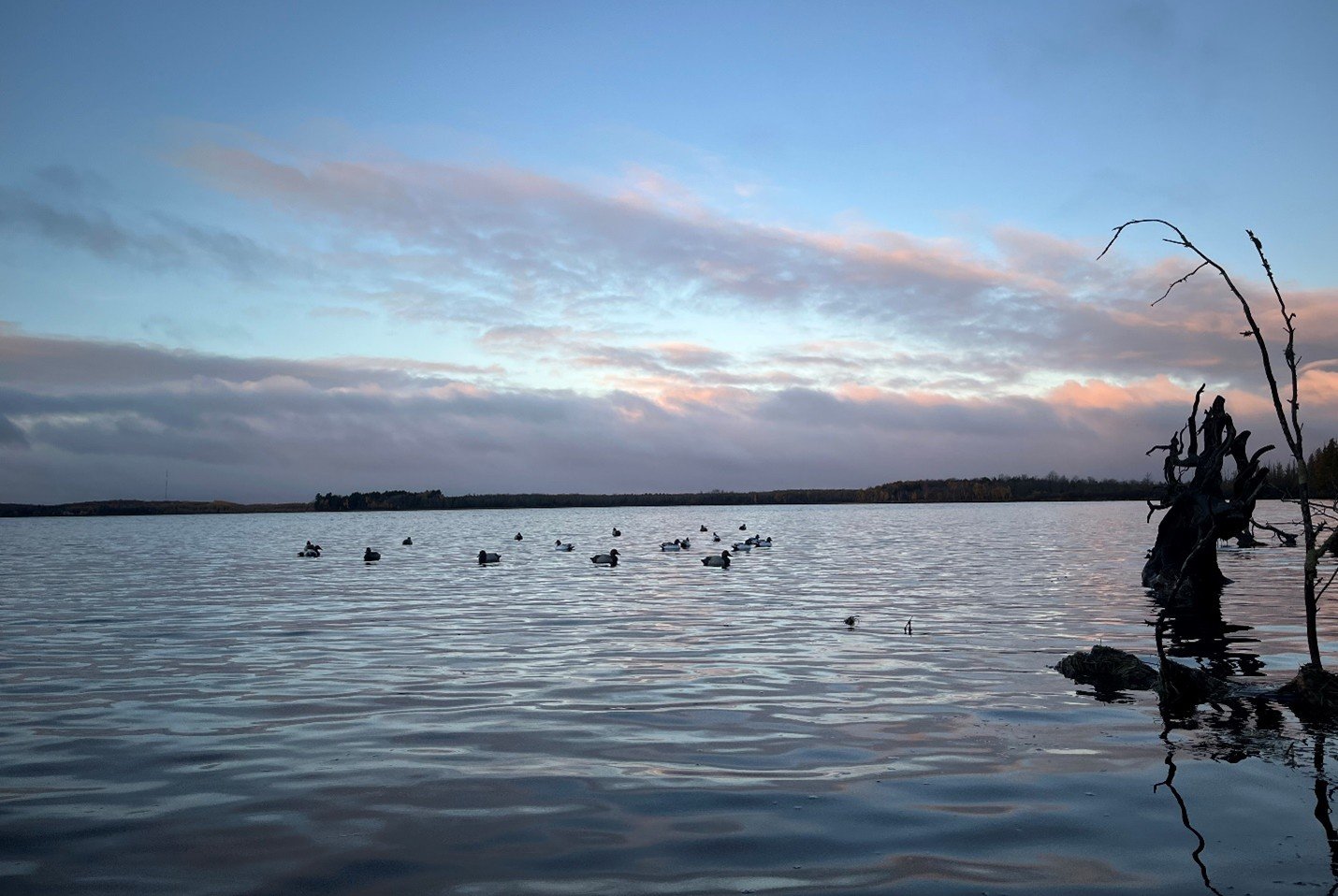
Lessons From My Scouting In Oneida County
I started with a mapping application. I looked for one that shows recent imagery so I could get an idea of the water and vegetation levels. The DNR mapping tool is a good resource to determine whether a lake has public access.
I also used the DNR Surface Water Data Viewer to determine which bodies of water had wild rice. Wild rice is a prime food source for ducks, a fact that was new to me when moving to the Northwoods.
Next, I went out in a boat during those early morning hours or evening hours to locate the ducks using all the tips mentioned in this column. Don’t forget your binoculars and a map to drop a pin.
Once I found ducks, I would start looking for a place to set up for the hunt, observing wind patterns and checking the weather for the next day to determine the best location. I needed a place to set my decoy spread with concealment, and somewhere to stash the boat.
Please don’t feel discouraged if the hunt doesn’t pan out the way you expected. Duck hunting takes a lot of preparation and dedication to be successful, especially when you’re new to the sport or a new area.
And whether you deem it successful or not, it’s always a great day to spend time on a hunt on a beautiful Wisconsin waterbody. You can’t go wrong. Stay safe and enjoy the hunts.