A Decoy Corner Article
By Bruce Urben, WWA President
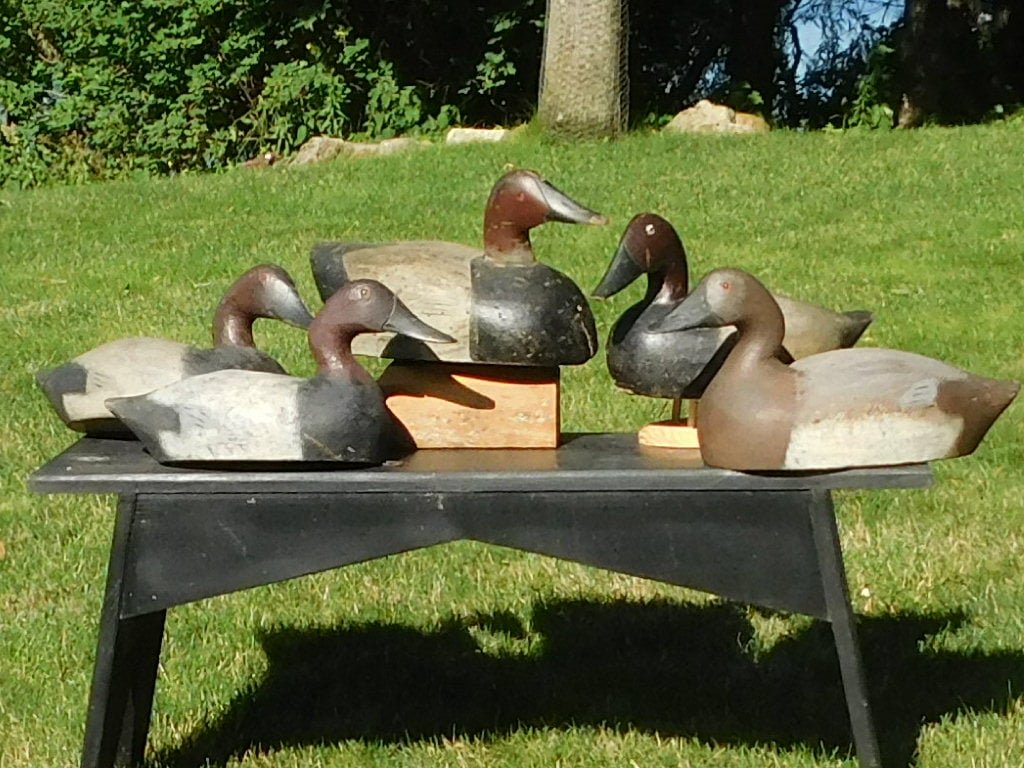
Photo credits: John Fandrey for his beautiful collection of Myron Frisque decoys.

By Bruce Urben, WWA President
Photo credits: John Fandrey for his beautiful collection of Myron Frisque decoys.
 I have written several articles about Green Bay decoy carvers, but this father-and-son team produced some of the area’s finest canvasback decoys. As you will see, both father and son were avid waterfowlers on the Bay of Green Bay and the Fox River. Their decoys were used hard year after year, so many are found with repairs or touchups! The following is a short article about Eugene and Myron Frisque and their beautiful working GreenBay decoys.
Eugene (Gene) Frisque was born in Belgium in 1874 and migrated to and settled in the Green Bay area at a young age. As Eugene grew into adulthood, he owned and operated a Taylor business in Green Bay, retiring in 1927. As an avid waterfowler, Eugene began carving his own decoys in 1910. He carved mainly canvasback decoys because that was the dominant species in the Bay of Green Bay at that time.
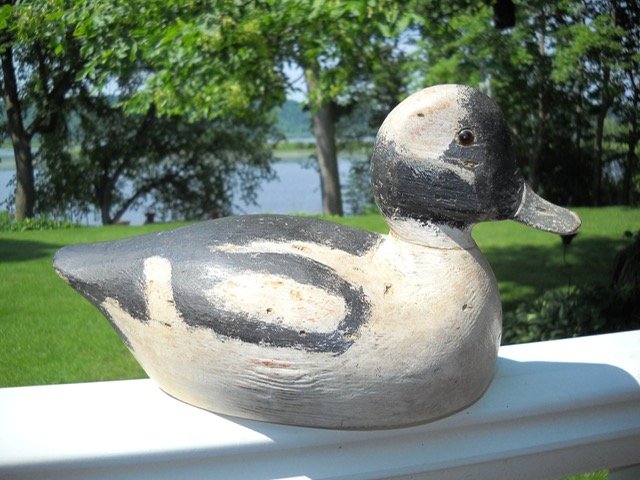 Eugene and his wife had 5 children, 2 daughters (Ellen and Margaret) and 3 sons (Myron, Gordon, and Merrill).
Eugene’s son, Myron, was born in Green Bay in 1907. He routinely hunted with his father on the Bay and followed in his dad’s footsteps in carving decoys for their use. Myron began carving decoys in the 1930’s and crafting many handmade duck skiffs. Myron worked for a short time for the Standard Oil Co. in Green Bay before starting his Honey business. Myron was married and had two sons, William and Joseph. Joseph took over his dad’s Honey business after his dad retired in 1986.
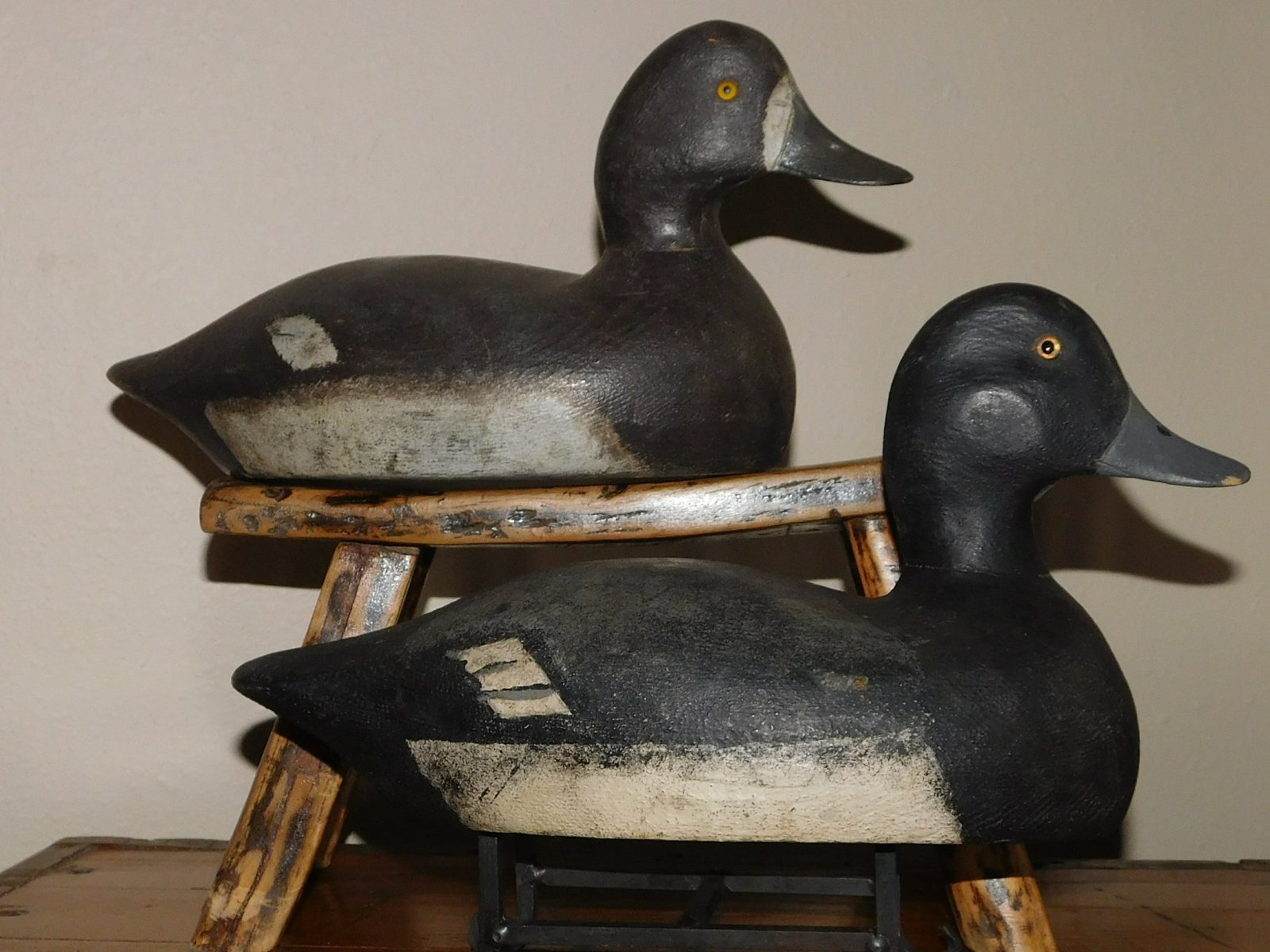
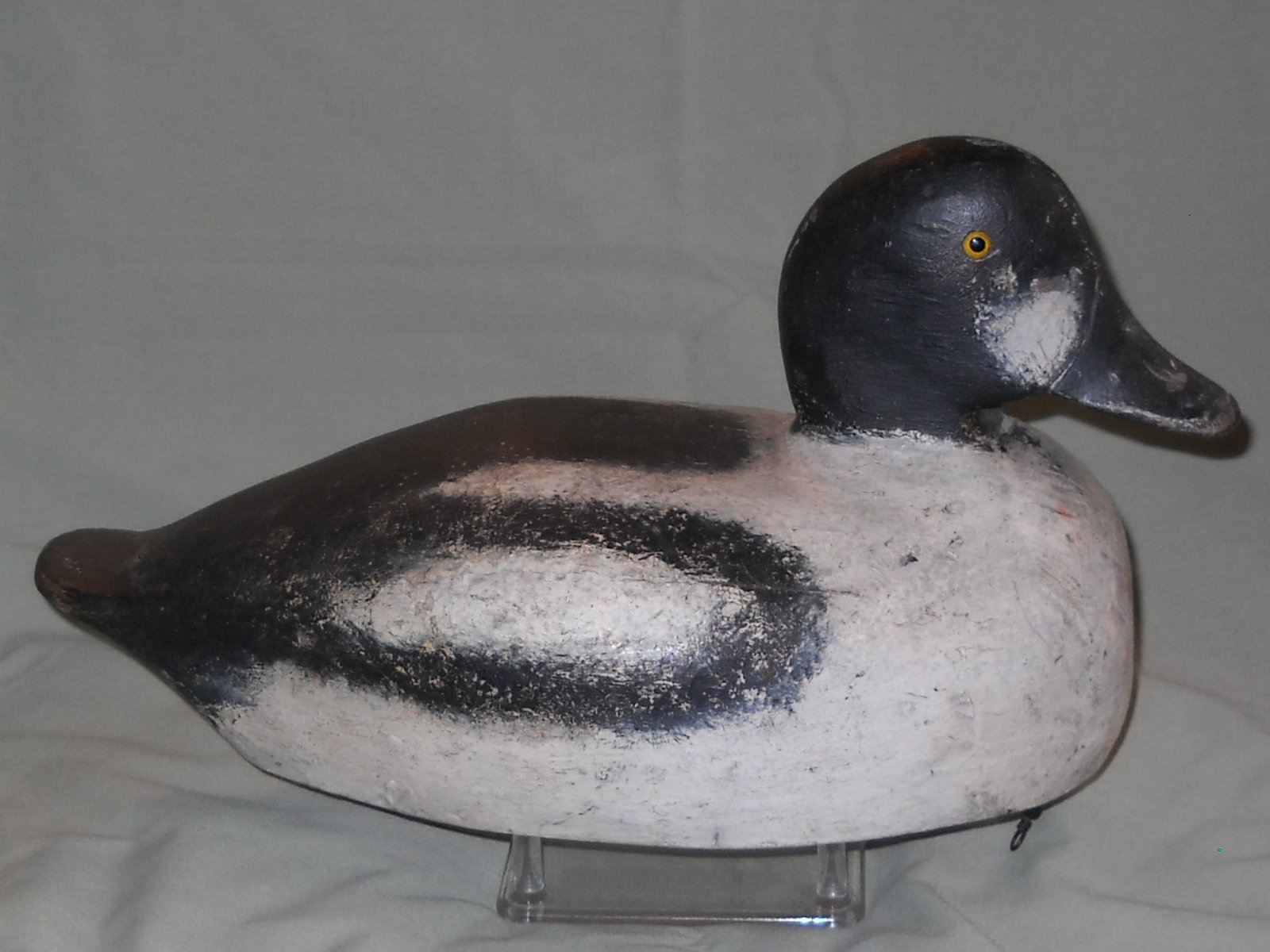 Eugene and Myron carved solid-wood decoys with convex bottoms. Their decoys were similar in construction, with wide bodies and upswept tails. They were painted with oil paint that represented the species. Myron’s redheads and buffleheads had some painted wing detail. Myron’s head had some carved detail at the head/bill interface and some mandible separation. Myron’s dad labeled the bottom of his decoys with EF, while Myron would stencil his name on the bottom of his decoys. While the majority of Myron’s decoys were made of solid cedar or pine, he did carve some cork decoys later in life in mallard, Canada, and Snow geese. It should also be recorded that Eugene and Myron hunted with some notable waterfowlers on Green Bay, including the Stiller brothers and the Hopkins.
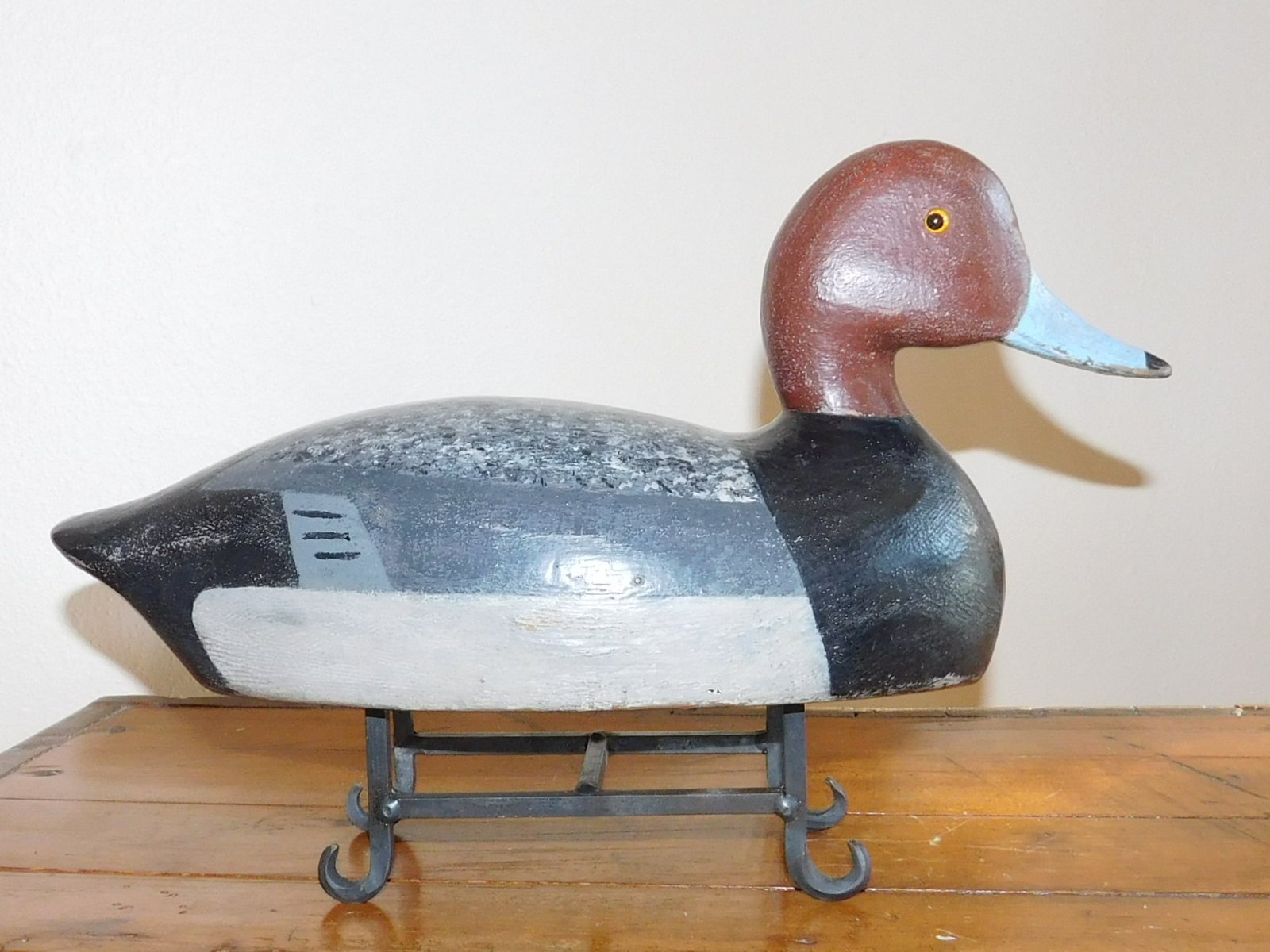 Eugene Frisque lived a full life and passed away in 1974 at the age of 100. Myron again followed in his dad’s footsteps and passed away after a full life of 92 years in 2002.
The Frisques were avid waterfowlers and excellent decoy carvers, carving 100’s of decoys in their lifetime. As you might expect, Frisque decoys are highly regarded by Wisconsin collectors. Many are selling at auction for 100’s of dollars. Unfortunately, their production was low, so their decoys are hard to find, particularly in good condition.
Eugene and Myron Frisque, two of a kind classic GreenBay decoy carvers, and both Wisconsin originals.
A special thanks to Decoy collector Jamie Anderson for his recent research and conversation with Joe Frisque, sharing the Frisque family history to preserve their story for generations of decoy collectors to come!
Photo credit to John Fandrey for his beautiful collection of Myron Frisque decoys.