By Anna Rzchowski, Public Lands Ecologist and Blake Bartels, Habitat Technician
This article appeared in the Wisconsin Waterfowl Association’s May 2026 Newsletter edition.
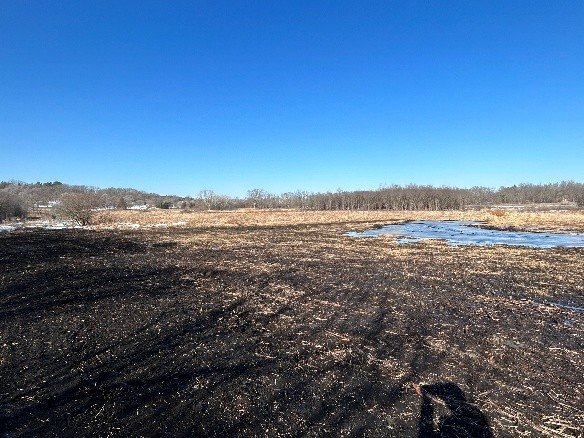
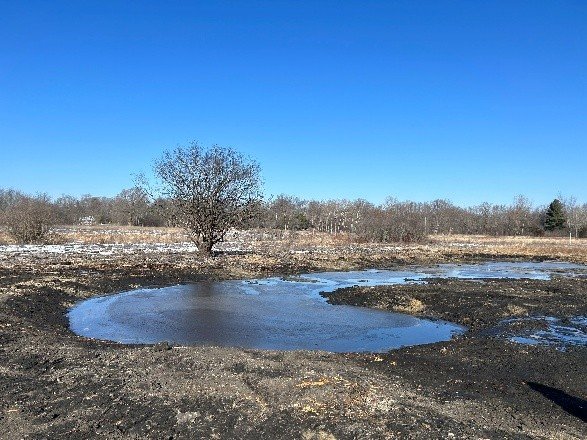
Pictured above: the Scuppernong project post-restoration. Photo credit: Anna Rzchowski.
The Wisconsin DNR, in collaboration with Wisconsin Waterfowl Association, is working to restore the prairies and wetlands surrounding the Scuppernong River within the Kettle Moraine State Forest-Southern Unit.
Discussions to restore hydrology to wetlands just south of Highway ZZ began several years ago. Several ditches drained wetlands along the Scuppernong River, one of which drew water from the river and routed it through a system of ditches to the west, rather than allowing it to flow naturally through the meandering stream channel. Following several site visits and discussions with DNR wildlife biologists, WWA staff developed design alternatives and permitting materials. DNR staff conducted the work in-house. This project will restore prairie and wetlands and remove woody invasive species, separating prairie nesting cover from 1,000+ acres of emergent marsh, sedge meadow, and calcareous fen habitat.
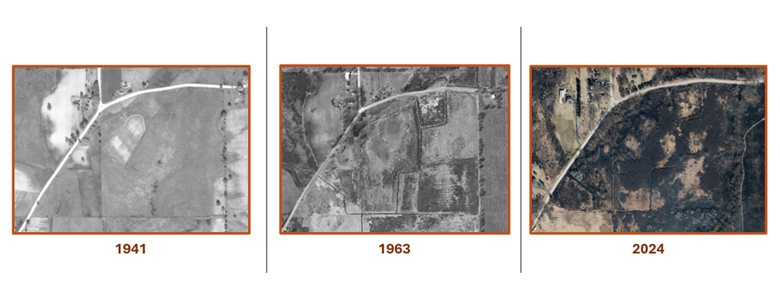
The past offers some helpful clues as to how to move forward with a restoration. Aerial imagery dating back to the 1940s shows us a history of agriculture on the site. Several fields are visible in the 1941 air photo. By 1963, ditches had been dug across the site, and the stream channel had been straightened- attempts to remove water from the wetlands for farming. By 2024, these ditches remain, though the straightened stream channel has begun to meander in places. With the ditches draining water from the surrounding wetlands, invasive brush (the dark areas) found a foothold and gradually began expanding.
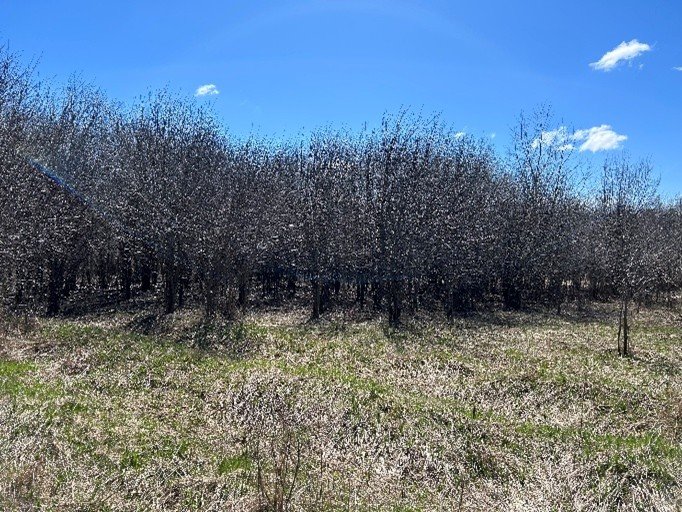
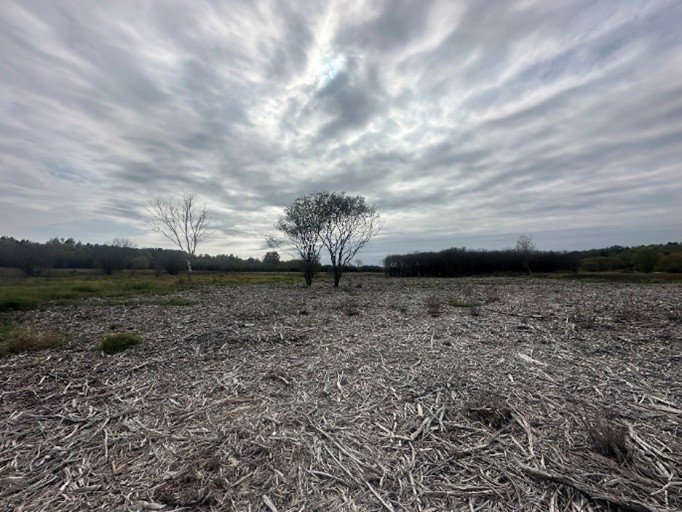
Before any earthwork began, DNR staff removed the now-dense stands of invasive buckthorn. When we first walked the site, the brushy wetlands were nearly impenetrable with almost bare soil underneath, and weren’t offering much habitat for wildlife of any kind. With the brush removed, the open areas can be seeded with prairie vegetation or allowed to regenerate naturally from the seed bank.
Following the brush removal in 2025, DNR staff plugged ditches and installed shallow wetland scrapes. We walked the site in spring 2026, shortly after the work was completed. The ditch plugs were functioning as intended and holding more water on-site. Over time, water will spread laterally through the soils, creating small pockets of shallow surface water in some places and saturated soils in others. The wetland scrapes are holding water, providing essential open-water habitat for waterfowl, invertebrates, reptiles, amphibians, and other wetland wildlife. This work, paired with the brush removal and restoration of adjacent uplands, will increase the number of nesting acres and accessible brood-rearing habitat for waterfowl in the area, thereby improving local bird populations.
There is still some work to be done. The southernmost ditch that meets the Scuppernong River is difficult to access- meaning that a good, long stretch of cold weather is needed to allow heavy equipment to reach the work area. DNR will complete this next stage of restoration when conditions allow. For now, we wait!

 By Anna Rzchowski, Public Lands Ecologist and Blake Bartels, Habitat Technician