
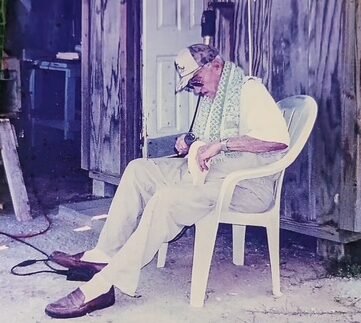
Gerald “Buster” Kidder
By Bruce Urben, WWA President
All photos courtesy Ruth Alfaro, Buster’s daughter
Online research into past Wisconsin Decoy carvers can be frustrating, and often the only information is through filed obituaries, if you are lucky. Then, sometimes there are those times when you can talk directly with a family member and get what Paul Harvey used to say… “Here is the rest of the story”.
 It is not unusual for me to receive inquiries from our newsletter readers (and Googlers) about carvers I have written about or where they can market their vintage decoys. To my delight, one reader contacted me to help her distribute her late father’s carving patterns, wood blocks, partially carved heads, and many carving books and journals. She wanted to follow through on her Father’s interest in helping new carvers begin their decoy-carving journey!
Needless to say, I jumped at the chance to help distribute hundreds of patterns, wood blocks, books, and journals to a number of students I have mentored over the past few years. They were Delighted!
After meeting with Ruth Alfaro, the carver’s daughter, I also found another Original Wisconsin Decoy Carver. Here is the story of Gerald “Buster” Kidder from Milton, Wisconsin.
 The Kidder family immigrated west to Wisconsin from the East Coast in the early 1800s by barge through the Great Lakes and settled near Milton, WI. The Kidder kin were blacksmiths, farmers, trappers, and market hunters. They settled in the Milton area because of the abundant waterfowl, game, and nutrient-rich farmland.
Gerald “Buster” Kidder was born in 1916 in Milton, WI, to Mearl and William Kidder. Buster had one brother who died before him. Buster grew up living off the land near Milton and followed the footsteps of his father and grandfather as a market hunter, waterfowler, trapper, and Sportsman. While the Lacy Act and the Migratory Bird Act of 1918 formally banned market hunting of waterfowl, unfortunately, there were still pockets of non-compliance with the Federal Law. Eventually, market hunting was halted, and Buster and his father and Grandfather began guiding sports coming to the Rock River and Lake Koshkonong as the new “East Coast” waterfowling hotbed.
 Buster began carving decoys early in life out of a need to attract waterfowl to harvest for food on their table and to satisfy the many East Coast “Sports” who wanted better duck shooting. He began carving in earnest in the early 1950s. Buster married several times over his lifetime and is survived by one daughter, Ruth Alfaro, now residing in Madison, WI. According to his daughter, his nickname came from the day he was born. His mother was a petite lady, and Buster was born over 10 pounds, a huge “Buster” as he was called!
Buster worked as a carpenter and maintenance engineer at the Edgerton Hospital. Later in life, Buster spent several months each year as a resident of Grand Isle, Louisiana, where he enjoyed fishing and continued carving decoys in the Louisiana tradition. At the time of his death, he was the oldest carver in the State of Louisiana!
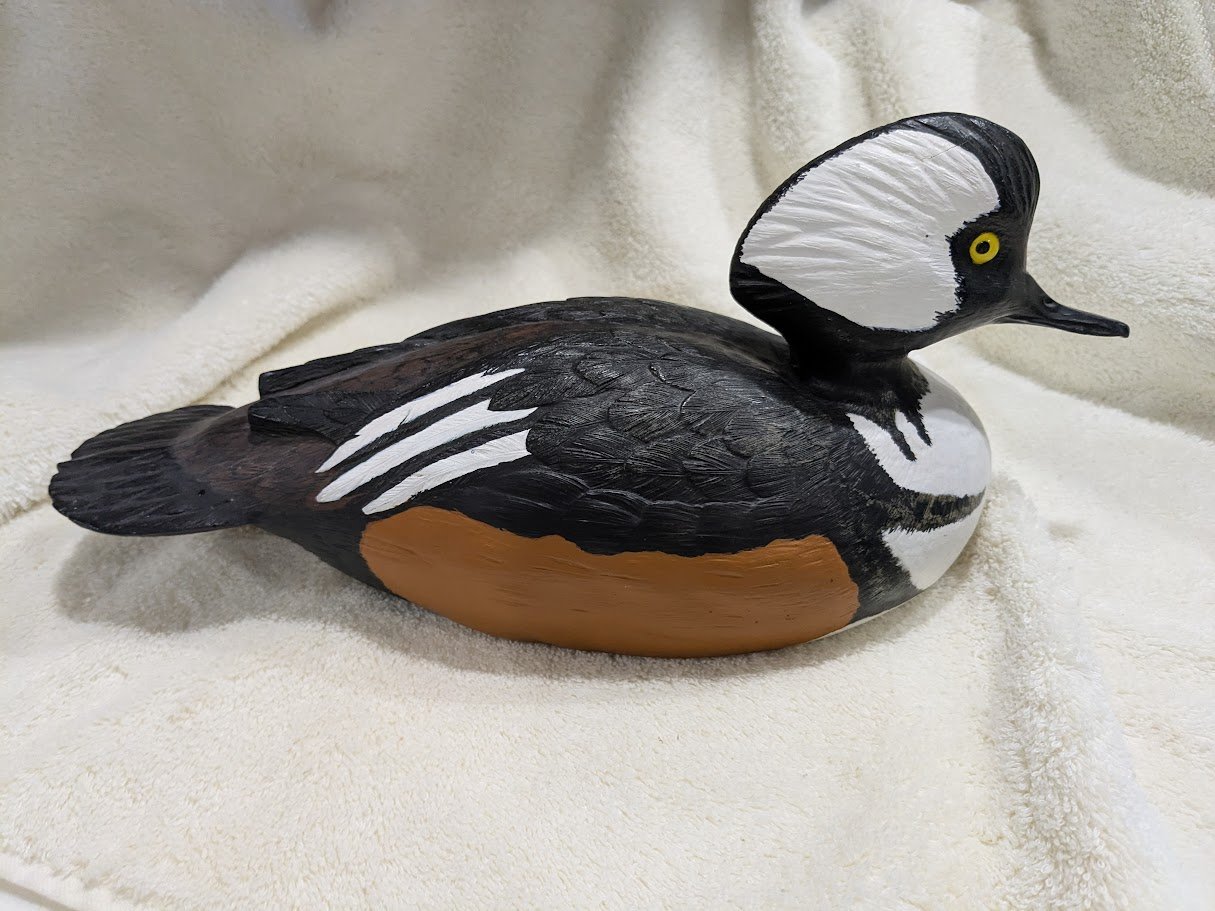
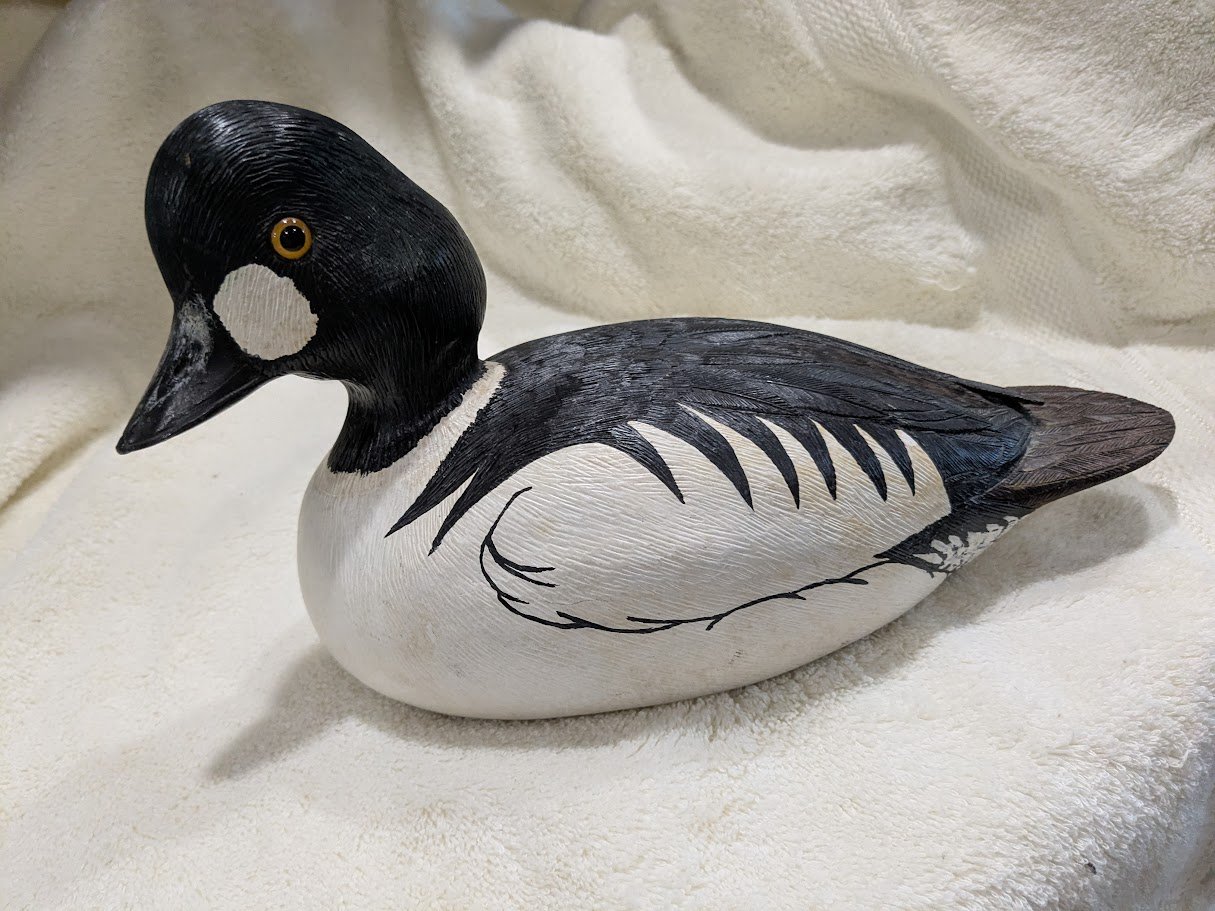 Gerald Kidder’s decoys were working decoys, intended for hunting waterfowl. He never entered any carving contests or sold any of his decoys. He did, however, gift his decoys for fundraising events, particularly to those Organizations supporting new carvers. Many were gifted also to friends and family. It is estimated that he carved nearly 1000 decoys and other wood carvings in his lifetime. According to his daughter, he was a meticulous carver, paying attention to detail and the essence of each species he carved.
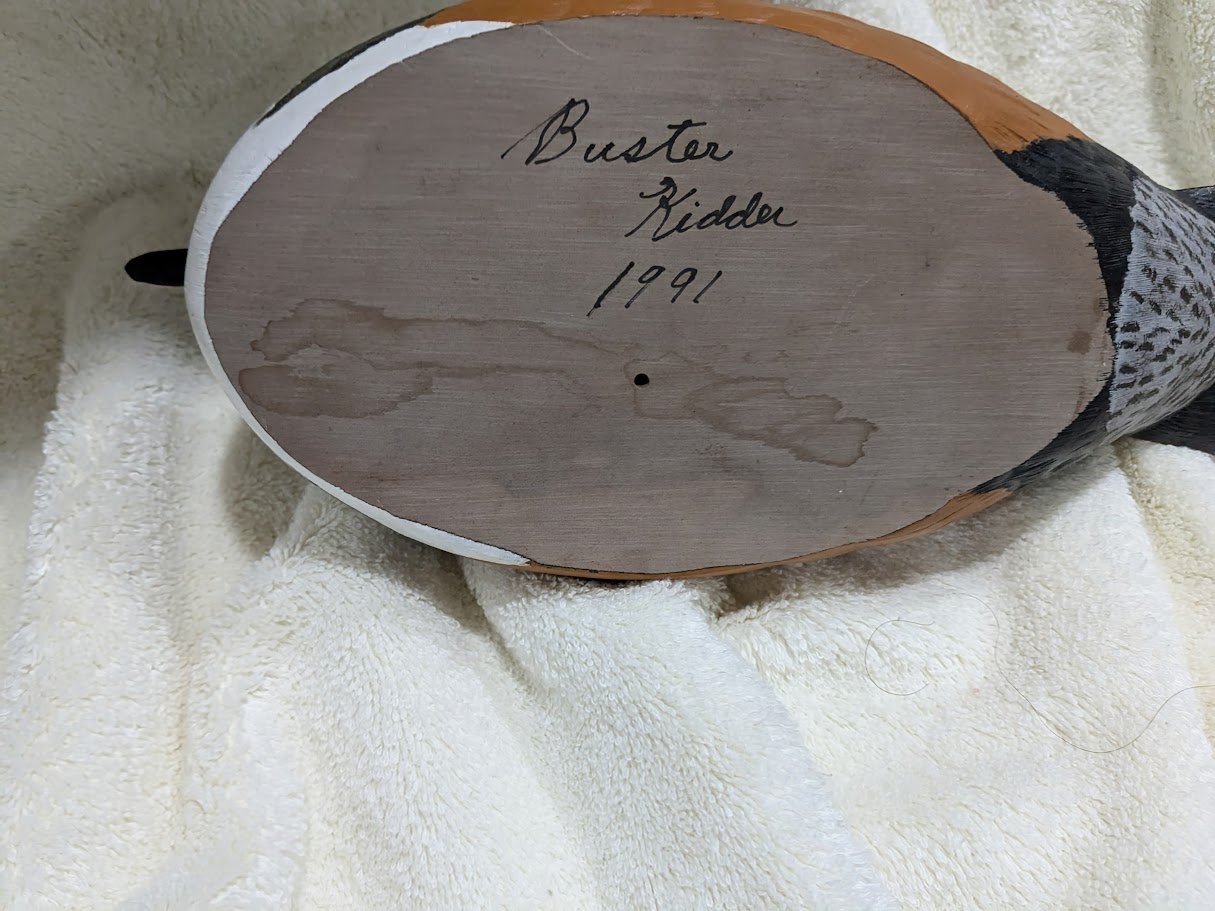
We know he carved canvasbacks, pintails, teal, mergansers, goldeneyes, coots, and wood ducks. We expect he carved most species of ducks, shorebirds, and songbirds, but there is no knowledge of him carving mallards. He carved his bodies from cedar, balsa, and tupelo while in Louisiana. Buster used pine for many of his heads. All of his decoys had glass eyes, and most were painted in oil paint. He began carving with hand tools and later used rotary carving methods. His decoys were painted with minimal blending and were very detailed and accurate to the species he carved. Buster was a student of decoy carving, consulting numerous peers and searching out the best books on carving and painting. He did draw some of his own patterns, but used a myriad of other carving patterns from his peers with different attitudes. He continually challenged himself in his carving methods. All of the decoys I have seen have his name and date on the bottom. Sometimes signed “Buster Kidder”, “BK” or “Handcrafted by Gerald Kidder”.
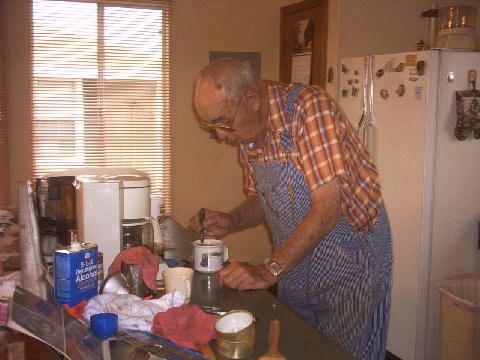 Gerald Kidder passed away on August 21st, 2009. He was another amazingly talented carver from Wisconsin and later in Louisiana as well! We will still call him a Wisconsin Original Decoy carver.
Special thanks to Ruth Alfaro, Buster’s daughter from Madison, Wisconsin for all the background and photos of her dad. Buster is surely missed by family and friends. A carver I would have loved to have known personally!


