By DDNR Conservation Warden Kyle Johnson
This article appeared in the Wisconsin Waterfowl Association’s April 2026 eNewsletter.
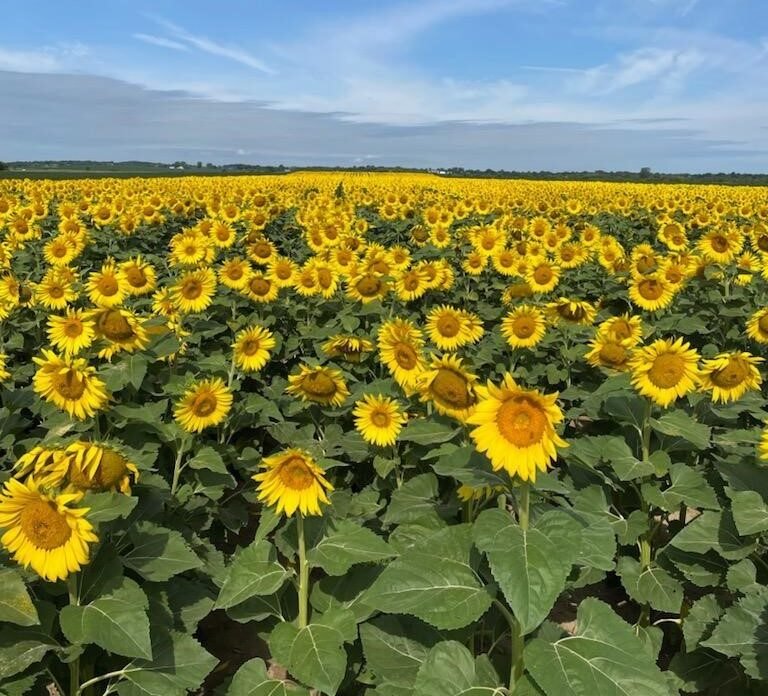
Pictured above, sunflowers fill a dove hunting field.
CREDIT: DNR Wildlife Tech Cassandra Young

By DDNR Conservation Warden Kyle Johnson
This article appeared in the Wisconsin Waterfowl Association’s April 2026 eNewsletter.
Pictured above, sunflowers fill a dove hunting field.
CREDIT: DNR Wildlife Tech Cassandra Young
If you ask a hunter to define opening day, chances are you will hear as many definitions as the number of hunters you ask.
The hunter may think about being in the duck blind. Then, there’s the opening of the gun deer season or the spring morning near a turkey roost. Their answer may be flushing grouse, and the list goes on.
Now, ask a hunter to describe their emotions and feelings when they think about their opening day, and the answers may be similar — excited, hopeful, and nostalgic. All those emotions may be in play come Sept. 1, as it will mark the first of several fall hunting openers.
This day starts with a bang in the dove fields at first light in Rock County.
Dove fields are the hunting niche of Rock County. Rock County is home to around 12 managed dove fields that offer sunflowers or winter wheat.
These are quite the draw for the dedicated dove hunters. I have checked hunting groups who have driven for hours – more than four, in fact – just to spend time in the dove fields on opening day.
Those opportunities wouldn’t have been made possible without the hard work and dedication of our wildlife staff and sharecroppers who spent the time planning, planting, maintaining, and prepping the fields for dove season.
No matter how hard a field can be worked, Mother Nature has the final say. Ragweed can sometimes take over and tower to more than 10 feet tall. The summer rain can drown crops. As with any hunting, scouting ahead of time is essential. The locations of dove fields can be found on the DNR website by searching for the Fields & Forest Lands Interactive Gamebird Hunting Tool (FFLIGHT).
A common theme between the hunters I encounter in the field is that dove hunting is practice for the upcoming duck season — and it’s a way to dust off the shotgun for the season.
It’s often viewed as getting out hunting for the first time to “scratch the itch.” The good thing about dove hunting is that it doesn’t require a lot of equipment, and you can often be successful by just sitting along a field edge near a dead tree.
Another similarity among hunters I encounter is that, no matter how many years of hunting experience they have, they are reminded how hard doves can be to harvest. When contacting hunters, it’s not uncommon to see an average of three doves per box of shells. No matter how many misses the hunters may have, the group camaraderie and excitement of the new hunting season tend to overcome their shooting precision. I have a few reminders to share regarding dove hunting.
Also:
Enjoy your opening day and stay safe!