Wardens’ Heartfelt Desire To Help Gets New Tool
By Joanne M. Haas/Public Information Officer, DNR Division of Public Safety and Resource Protection
This article appeared in the Wisconsin Waterfowl Association’s August 2026 eNewsletter.

By Joanne M. Haas/Public Information Officer, DNR Division of Public Safety and Resource Protection
This article appeared in the Wisconsin Waterfowl Association’s August 2026 eNewsletter.
The state conservation wardens who answer the call to find a loved one lost in water say it a mission of the highest order – a priceless act from a service heart to ease a broken one.
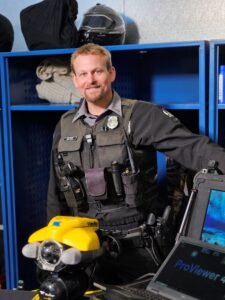
The team of Wisconsin Department of Natural Resources wardens who train and dedicate their time, in addition to fulfilling their regular duties, pilot sophisticated underwater search drones, known as remotely operated vehicles.
Together, they are the DNR’s Mission Ready ROV Team. These wardens can find sunken evidence, storm debris, stolen property, submerged homeland security threats, infrastructure issues, invasive species and missing loved ones.
“Any task is a challenge, and it is a mission,” said Lt. Drew Starch, the leader of this specialized DNR Division of Public Safety and Resource Protection mission-ready warden team. “You are driven to have an end-result. It is rewarding when you are successful.”
While the heartfelt drive to help on every call is real, it intensifies when searching for a missing person – and to make the mission successful as fast as possible for those waiting for word.
“It is a somber and sad moment. You can’t put a financial dollar amount on the closure that we bring,” Starch said of moments connecting with survivors when there is a recovery of their friend or family member. “Having not recovered is heart-wrenching. The families don’t have the closure to accept what happened.”
Starch and his team recently added another valuable tool to find those missing in water, thanks to a restitution received as part of a 2025 Green Lake County Circuit Court ruling against a kayaker who staged his death.
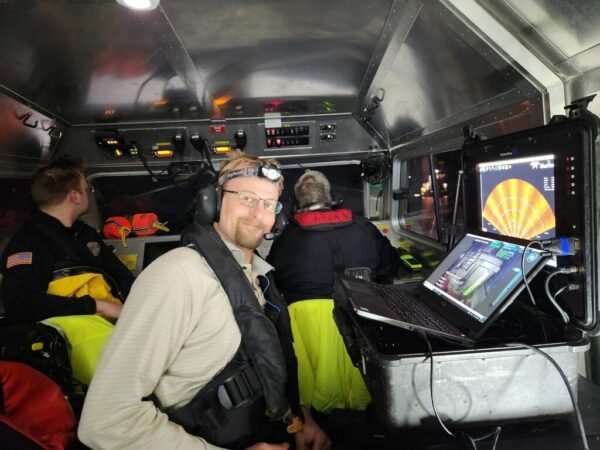
Ryan Borgwardt staged a boating fatality on Big Green Lake, the state’s deepest inland lake, back in August 2024. Almost two months later, authorities determined he had fled the country and falsified his death for personal reasons. Green Lake County Sheriff and other law enforcement partners located Borgwardt in Europe and convinced him to return to Green Lake.
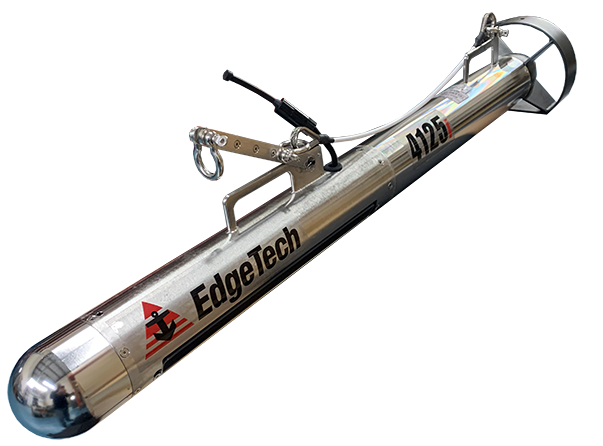
 The court ordered Borgwardt to pay restitution to the DNR for its approximately 350 hours of staff time spent searching for him. The DNR used about $9,000 of the funds to purchase a device called a tow fish sonar, shown at right. The unit can map the bottom of waterbodies for missing persons, items and hazards, and has been used in missions.
The use of these advanced remote tools helps to maximize effectiveness and efficiency of underwater searches and reduces the need to expose public safety divers to risky recoveries involving scenarios such as significant depths or entanglement.
“The tow fish unit is a vital tool to our program which will assist in bringing closure to families and communities when tragedy strikes,” Starch said. “The new equipment will be used in searches for the truly missing and help those waiting on the shore.”
Remote tools also support other essential mission sets for wardens and have been used to ensure critical infrastructure protection, respond to environmental spills and protect Wisconsin’s submerged cultural resources, such as the many shipwrecks covering the Lake Michigan beds.
Learn more about the work of the conservation wardens on the DNR’s Division of Public Safety and Resource Protection webpage.


